
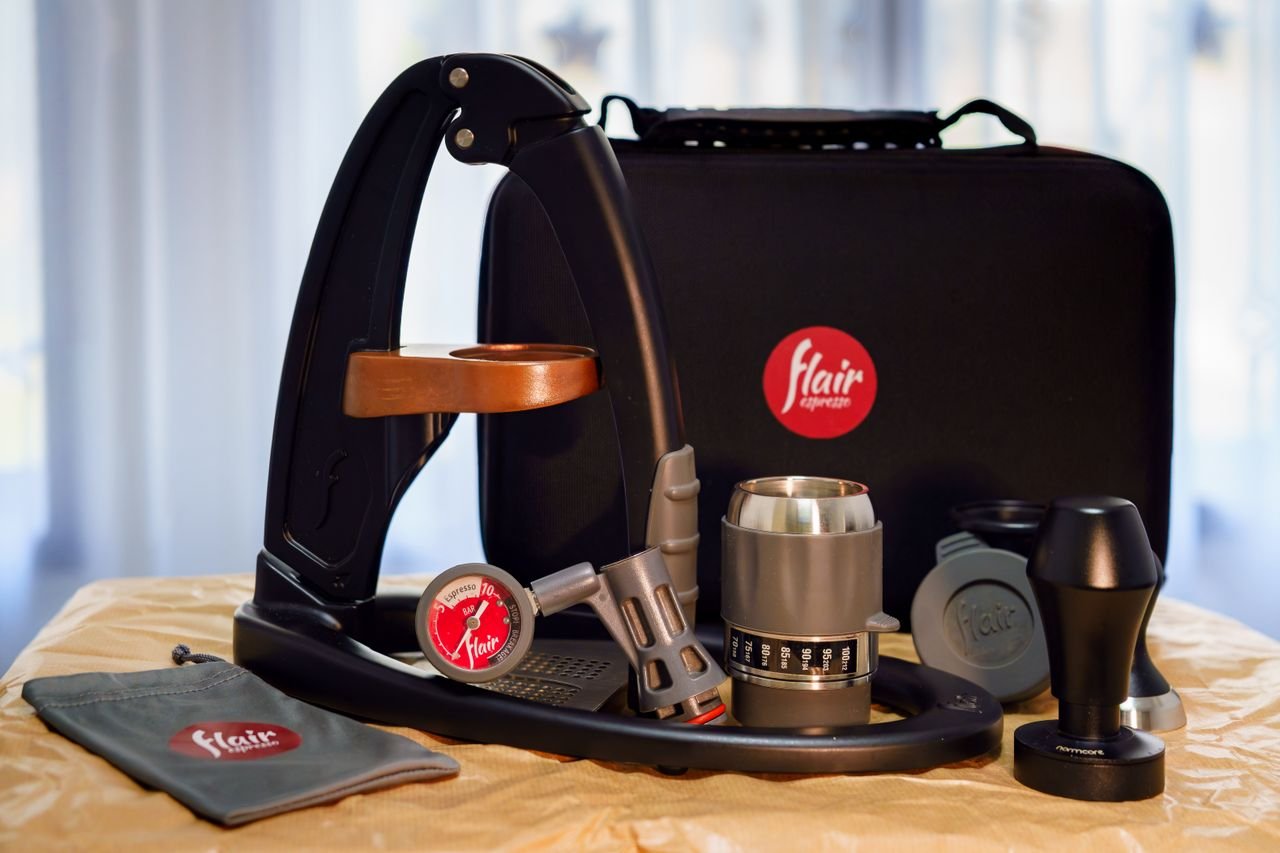
Choosing an espresso machine should feel exciting. You imagine fresh coffee in the morning, the smell of a good shot pulling, and that first sip before the day begins. But somewhere between the first search and the hundredth review, excitement turns into confusion. Manual or automatic? Semi-automatic or fully automatic? Lever or pump? What does any of it actually mean for your daily routine?
Here is the good news: neither option is objectively better. They are simply different, and one of them fits your life better than the other. This guide will help you figure out which one that is, without drowning you in technical specs.
What Is the Actual Difference?
At the most basic level, a manual espresso machine puts the brewing process in your hands. You control the grind, the tamping pressure, the water temperature, and how long the extraction runs. Every shot you pull is a direct result of the choices you made. Some manual machines use a lever to build pressure manually, while others use a pump but still leave most variables up to you.
An automatic espresso machine handles a significant portion of that process for you. Semi-automatic machines automate the pump pressure but still let you manage the grind and dose. Fully automatic machines handle the entire shot with a single button press. Super-automatic models go even further, grinding the beans and producing a finished espresso from start to finish with almost no input from you.
Both categories make real, quality espresso. The difference is not in the result so much as in the relationship between you and the machine.
The Case for Manual Espresso Machines
Manual machines have a reputation for being complicated and only suitable for experts. That reputation is only partially deserved. Yes, there is a learning curve. But for a certain kind of coffee lover, that learning curve is the whole point.
When you pull a shot manually, you are developing a genuine skill. You start to notice how a finer grind slows the extraction. You learn what an even tamp feels like under your palm. You begin to understand the relationship between water temperature and flavor. Over time, you build an intuition that makes each cup feel intentional rather than automated. For people who love the craft of coffee, that process is deeply satisfying.
Manual machines also tend to have fewer electronic components, which generally means fewer things that can go wrong over time. Many lever machines from decades ago are still in use today, pulling excellent shots in home kitchens and professional setups alike. If longevity and repairability matter to you, manual is worth considering seriously.
The honest trade-off is that a manual machine asks something of you every single time you use it. If your grinder is not calibrated well, or your tamp is uneven, or your water temperature is slightly off, the shot will reflect that. The machine will not compensate. It performs exactly as well as the person operating it, which means your worst mornings can produce your worst espresso.
The Case for Automatic Espresso Machines
Automatic espresso machines exist because most people want great coffee without turning it into a daily ritual. And there is nothing wrong with that. Most people who love espresso are not aspiring baristas. They just want a reliable, delicious cup as part of a busy morning.
The biggest advantage of a good automatic machine is consistency. You press a button and get a well-extracted espresso regardless of how awake you are, how much time you have, or whether someone else in your household used the machine before you. For busy families, shared kitchens, or anyone who treats espresso as a comfort rather than a craft, that consistency is genuinely valuable.
Modern automatic machines have also become far more capable than they used to be. Many now include PID temperature control, programmable shot volumes, and even pressure profiling, features that were once found only in professional café equipment. Going automatic does not mean sacrificing quality. It means prioritizing reliability and ease of use.
The trade-off here is that automatic machines have more moving parts, particularly super-automatics with built-in grinders. They require regular cleaning to keep performing at their best, and some models are harder to service than others. There is also a ceiling to how much creative control you have. If you eventually want to experiment with different extraction parameters, a fully automatic machine may feel limiting.
Who Should Choose Which?
This question comes down to what coffee means to you, not to anyone else.
If making espresso is something you want to enjoy as a process, and you are genuinely curious about the craft, a manual machine will reward that curiosity well. The learning curve feels worthwhile when you actually want to learn. A quality semi-automatic is often the best starting point for newer home baristas because it gives you meaningful control over the most important variables while handling the pump mechanics for you.
If espresso is about the outcome rather than the process, go automatic with confidence. A well-made automatic machine will give you excellent coffee every day without asking much of you. You get to focus entirely on enjoying your cup rather than managing the variables that produce it. There is real pleasure in that too.
A semi-automatic machine sits in a useful middle ground that many home brewers find ideal. You control the grind size, the dose, and the extraction time, but the machine manages the pressure and pump. It is craft-adjacent without being demanding. For many people, this is exactly the right balance.
A Few Practical Things Worth Thinking About
Budget matters, but perhaps not in the way you expect. A great manual machine can cost significantly less than a mediocre automatic one. However, manual machines need a quality burr grinder to perform at their potential, and that adds to the overall investment. Super-automatic machines typically include a built-in grinder, which simplifies setup and reduces the total number of purchases.
Your morning routine is worth being honest about. If you have fifteen minutes and enjoy the ritual, a manual machine is genuinely practical. If you have three minutes and two other people waiting behind you, an automatic machine makes your mornings better, not just easier.
Counter space is a real consideration too. Some lever machines are beautifully compact and become a visual feature in a kitchen. Some automatic machines are large and require dedicated counter real estate. Make sure whatever you choose fits the kitchen you actually have.
The Right Machine Is the One You Will Actually Use
At the end of the day, the best espresso machine is not the most expensive one or the one with the best review scores. It is the one that fits your life well enough that you reach for it every morning without hesitation.
A manual machine sitting unused because it feels like too much effort is a worse outcome than an automatic machine you love using every day. And an automatic machine that leaves you curious and wanting more involvement might eventually push you toward something with greater depth.
Start with a clear picture of your habits, your patience, and what role coffee actually plays in your day. The machine that matches those answers honestly is the right one. And when you find it, every cup it makes will feel like it was made exactly for you.