
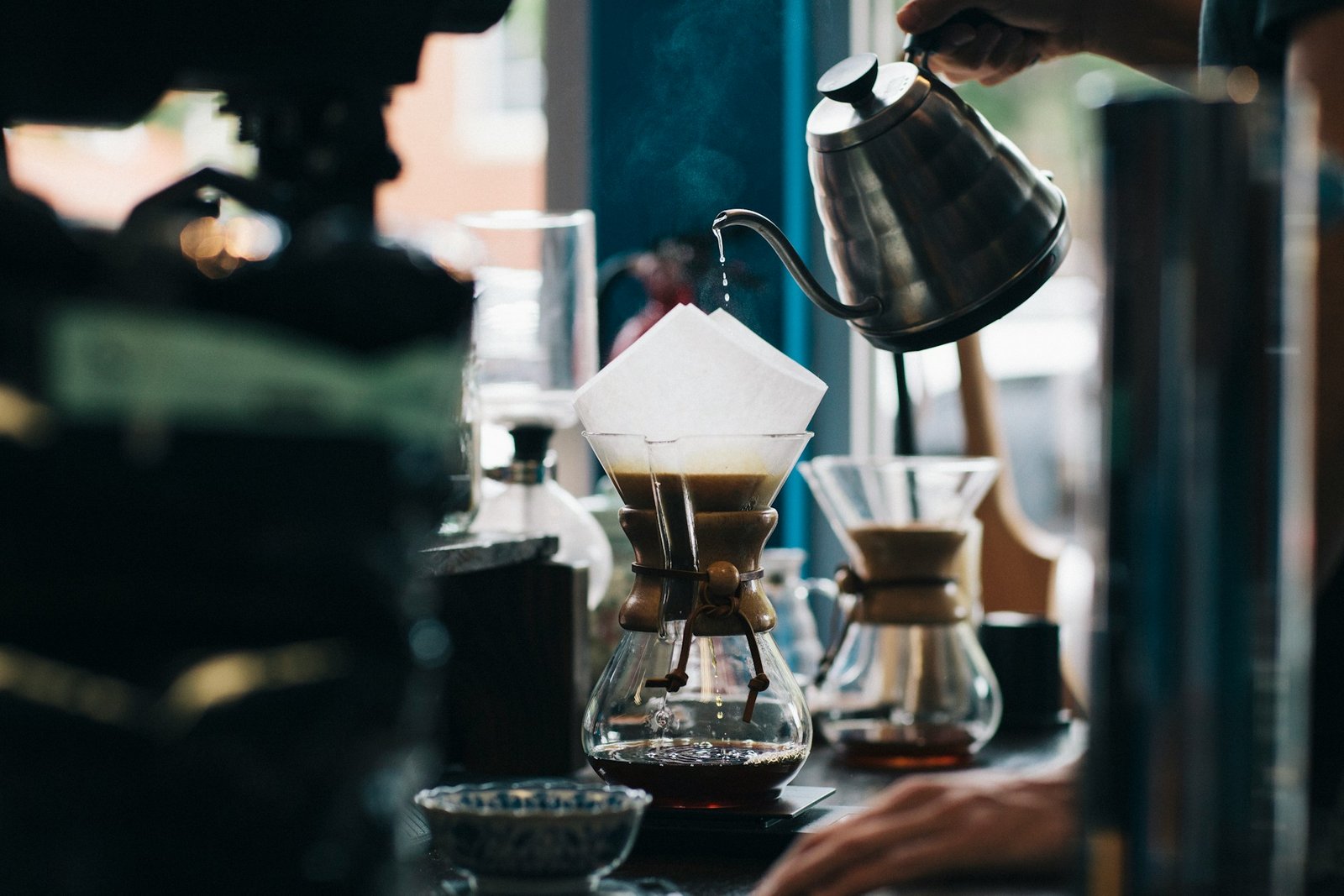
Pour-over coffee looks simple. You need water, coffee, a filter, and a kettle. But if you have ever brewed a cup that tasted flat, sour, or strangely bitter, you already know that simple does not always mean easy. The good news is that most pour-over problems come from just a handful of habits, and once you notice them, they are easy to correct.
Here are the five mistakes we see most often, along with simple ways to fix each one right away.
Mistake 1: Using the Wrong Grind Size
Grind size is probably the single biggest reason pour-over coffee tastes off. If your grounds are too fine, water struggles to pass through them. This slows down the whole brew and pulls out too much bitterness. If your grounds are too coarse, water rushes through too fast, and your coffee ends up thin and sour, almost like weak tea.
The fix is easier than it sounds. For most pour-over methods, you want a grind that looks and feels like coarse sea salt. A helpful way to check your grind is to time your brew. A standard cup should take somewhere between two and a half to three and a half minutes to fully drain. If it finishes much faster, grind a little finer next time. If it drags on much longer, go a little coarser. Small adjustments make a noticeable difference.
Mistake 2: Skipping the Bloom
The bloom is the first small pour of water, just enough to wet the grounds, followed by a short pause of thirty to forty five seconds before you continue. During this time, you will often see the coffee puff up and release little bubbles. That is carbon dioxide escaping, a natural part of freshly roasted coffee.
Skipping this step is a common shortcut, but it comes at a cost. Without blooming, water cannot soak evenly into the grounds, and the gas trapped inside pushes water away from the coffee instead of letting it extract properly. This often leads to uneven flavor, sometimes both weak and bitter in the same cup. The fix is simple. Always start with a small pour, just enough to cover the grounds, and let it rest before you pour the rest of your water. This one habit alone can noticeably improve your cup.
Mistake 3: Pouring Water Too Fast or Unevenly
Many people treat the pour like filling a glass of water, all at once and without much thought. But pour-over coffee depends on a slow, controlled pour to work well. When water hits the grounds too fast or lands in one spot, it can dig a channel straight through the coffee bed. Water then escapes through that channel instead of moving evenly through all the grounds. The result is a cup that tastes both under extracted and bitter at the same time, which sounds strange, but it happens more often than people expect.
The fix is to slow down and pour in gentle, small circles, starting from the center and slowly moving outward, then back in. A kettle with a narrow spout, often called a gooseneck kettle, gives you much more control over the flow. You do not need to be perfect. You just need to keep the water moving steadily and evenly across the grounds.
Mistake 4: Using the Wrong Water Temperature
Water that is too hot can scorch your coffee, pulling out sharp, bitter flavors. Water that is too cool will not extract enough, leaving your coffee weak and sour. The ideal range for most pour-over coffee sits between 195 and 205 degrees Fahrenheit, or roughly 90 to 96 degrees Celsius. That is just below a rolling boil.
If you do not have a kettle with temperature control, there is an easy workaround. Boil your water, then let it sit off the heat for about thirty seconds before pouring. This small pause brings the temperature down into a much better range. It costs you almost nothing and protects your coffee from tasting burnt or hollow.
Mistake 5: Guessing the Coffee to Water Ratio
Eyeballing your coffee and water might feel quicker, but it is also the fastest way to end up with an inconsistent cup. Too much coffee and not enough water gives you something thick and overwhelming. Too little coffee and your cup tastes watery, no matter how good the beans are.
The fix is to use a simple kitchen scale. A reliable starting ratio is one part coffee to fifteen to seventeen parts water by weight. For example, twenty grams of coffee paired with roughly three hundred to three hundred forty grams of water is a solid place to begin. From there, you can adjust slightly based on your taste. Prefer it stronger, lean closer to the fifteen ratio. Prefer it lighter, move toward seventeen. Once you find your number, you can repeat it every single time.
Small Changes, Big Difference
None of these fixes require special skill or expensive equipment. They simply ask you to slow down, pay closer attention, and treat each step with a bit more care. Pour-over coffee rewards patience more than perfection, and once you dial in your grind, your bloom, your pour, your temperature, and your ratio, you will notice the difference in your very next cup.
Coffee is meant to be enjoyed, not stressed over. So the next time your pour-over does not taste quite right, do not give up on the method. Just walk back through these five points, adjust one thing at a time, and let your coffee show you what changed. That is really all it takes to brew a consistently great cup at home.