
There is nothing quite like pulling a perfect shot of espresso in the morning. That rich aroma, the golden crema sitting on top, the deep and complex flavor , it is the kind of thing that makes even the earliest mornings feel worthwhile. But here is something most people never think about: that perfect shot depends just as much on a clean machine as it does on great beans.
If your espresso has started tasting a little flat, slightly bitter, or just off, your machine might be telling you something. The good news is, the fix is simpler than you think.
This guide will walk you through exactly how to clean and descale your espresso machine the right way, so every cup you make tastes the way it should.
Why a Clean Machine Matters More Than You Think
Your espresso machine works hard every single day. Coffee oils, old grounds, and mineral deposits build up over time inside the group head, portafilter, steam wand, and water lines. On the outside, this buildup might be invisible. On the inside, it is quietly affecting every single shot you pull.
Coffee oils go rancid surprisingly fast. When they cling to your portafilter or group head, they add a stale, bitter edge to an otherwise good cup. Mineral scale , which comes from the calcium and magnesium naturally found in tap water , coats the internal components and heating elements of your machine. Over time, scale slows water flow, reduces temperature consistency, and forces your machine to work harder than it needs to. Left unchecked, it can eventually cause real damage.
Cleaning your espresso machine is not just about hygiene. It is about protecting your investment, extending the life of your machine, and most importantly, making sure every cup you brew is as good as it can possibly be.
Cleaning vs. Descaling: What Is the Difference?
Before we get into the how, it is worth clarifying the difference between cleaning and descaling, because they serve two very different purposes and people often confuse the two.
Cleaning refers to the regular removal of coffee residue, oils, and grounds from the removable and visible parts of your machine , the portafilter, basket, group head, drip tray, and steam wand. This is something you should be doing daily, or at the very least after every session.
Descaling refers to using a chemical solution to dissolve the mineral buildup , commonly called limescale , that accumulates inside the internal water system of your machine. This needs to happen less frequently, but it is equally important and should never be skipped.
Think of it this way: cleaning keeps your machine tasting fresh, while descaling keeps it running properly. You genuinely need both to get the best out of your espresso.
How to Clean Your Espresso Machine: Daily and Weekly Habits
Daily cleaning does not take long, and a few consistent minutes after each use can make a significant difference in your coffee quality.
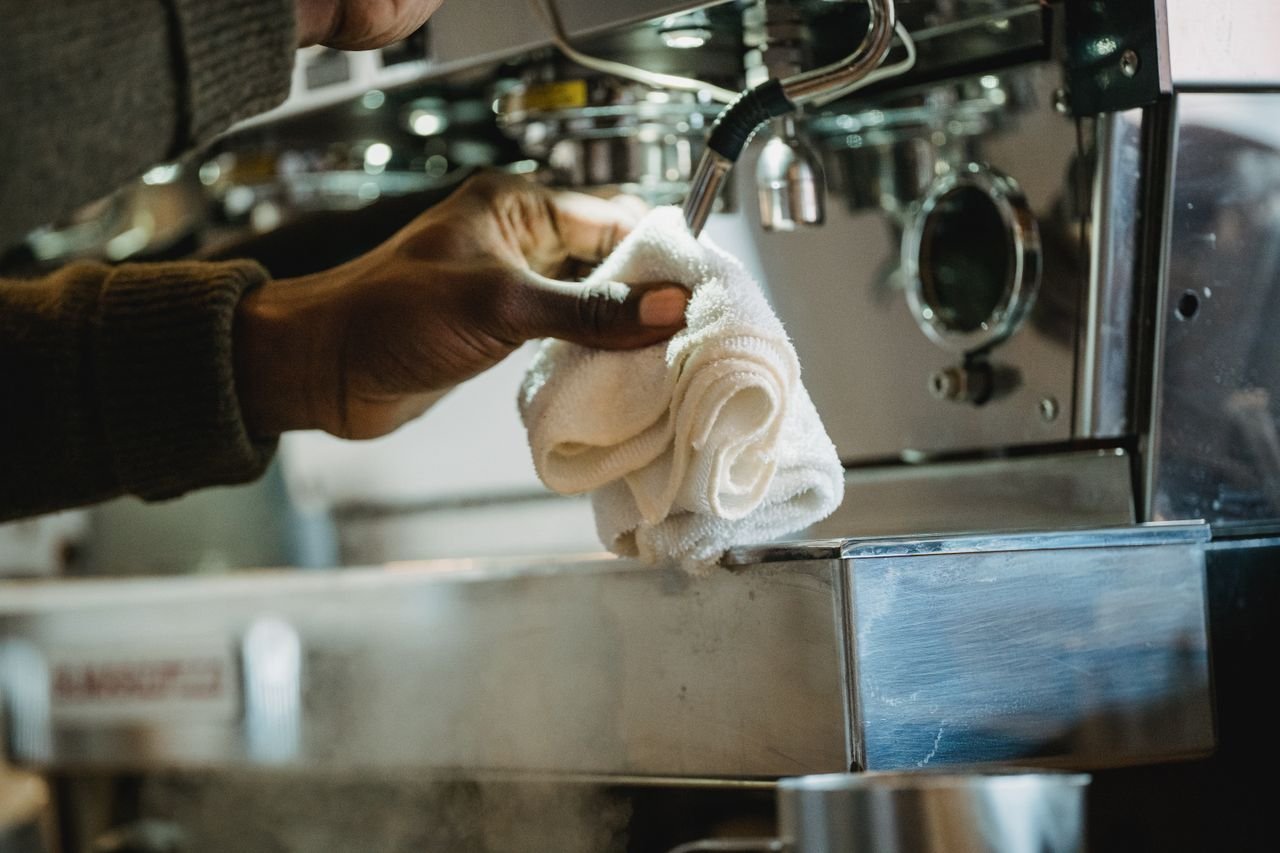
After each session, remove the portafilter and knock out the used coffee puck. Rinse the portafilter and basket under hot running water to remove any leftover grounds and oils. While you are at it, wipe down the group head with a damp cloth to clear any coffee residue from the screen. If your machine has a steam wand, purge it briefly after each use and wipe it down with a clean, damp cloth before any milk residue has a chance to dry and harden.
Once a week, take a few extra minutes for a deeper clean. Soak your portafilter and basket in hot water with a small amount of espresso machine cleaner or a food-safe cleaning tablet. Scrub away any buildup you find, rinse everything thoroughly, and dry before reassembling. If your machine supports backflushing , most prosumer and semi-automatic machines do , run a backflush cycle using a cleaning tablet. This flushes the group head and internal valves, keeping the whole system clear and fresh.
These small, consistent habits are the foundation of a well-maintained machine. They take far less time than most people expect, and the improvement in cup quality is something you will notice right away.
How to Descale Your Espresso Machine: A Step-by-Step Guide
Descaling is the part that most people put off , and most people wish they had done sooner. The process is straightforward, and most machine manufacturers include instructions in the user manual. Here is a general approach that works for most home espresso machines.
Step 1: Use the right descaler. Choose a descaling solution that is specifically formulated for espresso machines. Citric acid, commercial espresso descalers, and manufacturer-branded solutions are all effective. Avoid using white vinegar , it is a popular home remedy, but it can leave a lingering smell and taste in your machine, and it simply does not dissolve mineral scale as effectively as a purpose-made solution.
Step 2: Empty and prepare. Remove any water filter cartridge from your reservoir if your machine uses one. Mix the descaling solution with water according to the product instructions and pour it into the water tank.
Step 3: Run the descaling cycle. Many modern machines have a dedicated descaling mode built right in , check your manual to activate it. If yours does not, run the solution slowly through the machine in stages, allowing it to soak into the internal components. This is where the scale is actually being dissolved, so take your time and do not rush the process.
Step 4: Rinse thoroughly. Once the descaling cycle is complete, run at least two full tanks of clean, fresh water through the machine. This flushes out any remaining descaling solution so it does not end up in your coffee. This step genuinely matters , do not skip it.
Step 5: Reassemble and test. Put everything back together, run a blank shot without coffee, and observe how the water flows. If it runs freely and evenly, you are good to go. Your machine should already feel noticeably smoother.
How Often Should You Descale?
The answer depends on two things: how often you use your machine, and how hard your local water is. As a general guideline, most home espresso machines benefit from descaling every one to three months. If you use your machine daily or if your tap water is particularly mineral-rich, lean toward the more frequent end of that range.
Many modern machines include a built-in indicator light or alert that tells you when it is time to descale. Take this seriously when it appears. It is not just a friendly reminder , it is your machine letting you know that performance is already being affected. Responding promptly will save you from bigger problems down the line.
If you are ever unsure, a good rule of thumb is this: the sooner you descale, the easier it is. Scale that has been building up for six months is far harder to remove than scale that has been sitting for six weeks.
Common Mistakes Worth Avoiding
Even with the best intentions, a few common mistakes can undermine your efforts. Using the wrong cleaning products is one of the most frequent ones. Always use solutions that are specifically designed for espresso machines. Regular dish soap leaves residue that affects flavor. Harsh household chemicals can damage rubber seals and internal components that are expensive to replace.
Another mistake is skipping the rinse cycle after descaling. It might feel like an unnecessary extra step once the descaling is done, but descaling solutions are not something you want ending up in your morning cup.
Finally, the biggest mistake of all is simply waiting too long. The longer you leave it, the harder the buildup becomes to remove , and the more it affects your coffee in the meantime. Consistency is everything here. Small, regular efforts beat one big catch-up session every time.
A Clean Machine Is a Happy Machine
Taking care of your espresso machine does not require any special expertise or a large block of time. It just requires consistency. A few minutes each day, a deeper clean once a week, and a proper descaling session every month or two will keep your machine running smoothly and your coffee tasting exactly the way it should.
The effort is genuinely small. The difference in your cup is anything but.
If you have been putting off a cleaning session, today is as good a day as any to start fresh. Your next espresso will thank you.