
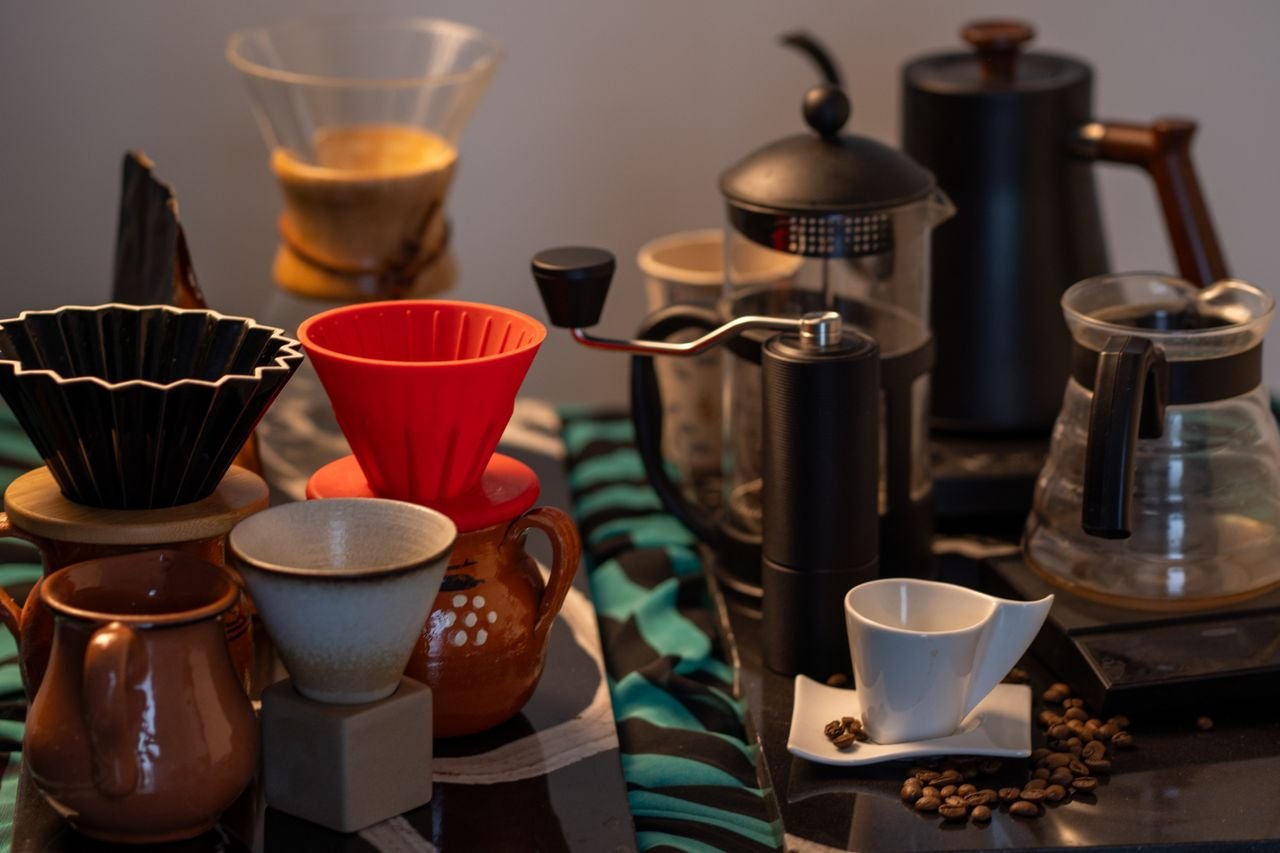
If you have ever stood in a coffee shop, stared at all the brewing gear on the shelf, and thought “which one is actually right for me?” — you are not alone. The French press and the pour-over are two of the most popular home brewing methods in the world, and they could not be more different from each other. One is slow and hands-on. The other is effortless and forgiving. And both can produce a truly excellent cup of coffee.
This is not a battle where one method wins and the other loses. It is more about understanding what each method offers, and then figuring out which one fits your mornings, your taste, and your lifestyle. So let us walk through it together.
First, a Quick Introduction to Each Method
The French press is one of the oldest and most recognizable brewing devices in the world. You add coarsely ground coffee to the glass or stainless steel cylinder, pour in hot water, let it steep for about four minutes, then slowly press the metal plunger down to separate the grounds from the liquid. No paper filter. No fuss. Just coffee and water doing what they do naturally.
The pour-over, on the other hand, is exactly what it sounds like. You place a paper (or metal) filter in a cone-shaped dripper, add ground coffee, and pour hot water over it slowly and deliberately in circular motions. The water drips through the coffee and filter, collecting in a carafe or mug below. It requires a bit more attention and technique, but the results can be stunning.
Both methods use no electricity, both are affordable, and both have passionate fans. But they produce very different results in the cup.
The Taste Difference Is Real
Here is where things get genuinely interesting. The French press produces a full-bodied, rich, and bold cup of coffee. Because there is no paper filter involved, the natural oils from the coffee grounds pass directly into your cup. Those oils carry a lot of flavor and give the coffee a heavier mouthfeel — almost velvety, some would say. You might also notice a slight texture or sediment at the bottom of your cup, which is completely normal and part of the experience.
The pour-over tends to produce a cleaner, brighter, and more nuanced cup. The paper filter catches most of those oils and fine particles, so what you get in your mug is clearer, lighter in body, and often more expressive in terms of individual flavors. If your coffee has floral notes, fruit-forward acidity, or delicate sweetness, a pour-over will bring those qualities forward in a way the French press simply cannot.
Think of it this way: the French press is like a full wool sweater on a cold day — warm, heavy, comforting. The pour-over is like a crisp linen shirt in the morning sun — bright, clean, refreshing. Neither is wrong. They are just different experiences.
How Much Effort Are You Willing to Put In?
Let us be honest about this part, because it matters more than most people admit.
The French press is remarkably low effort. You need a coarse grind, hot water (around 93 to 96 degrees Celsius is ideal), and about four to five minutes of patience. You do not need to pour carefully. You do not need to worry about flow rate. You do not need a scale. Just add coffee, add water, wait, press, and pour. Even on your slowest, groggiest Monday morning, you can make a great French press coffee.
The pour-over asks more of you. You will get better results if you use a gooseneck kettle to control your pour. A kitchen scale helps too, since the ratio of coffee to water matters. You need to pour slowly, in steady circles, in stages — typically a short bloom pour first to let the coffee degas, followed by two or three more pours over the next few minutes. It is a ritual as much as it is a brewing method, and many people genuinely love that. It can feel meditative and calming in the morning.
But if you are pressed for time or simply want your coffee without much ceremony, the French press will serve you far better on most mornings.
What About Equipment and Cost?
Both methods are relatively affordable compared to espresso machines or high-end automatic brewers, but there are still some practical differences worth knowing.
A good French press can cost anywhere from about $25 to $80 depending on the brand and material. Stainless steel versions are more durable and better at retaining heat. Glass versions let you see the brewing process, which some people enjoy. You will also need a coarse grinder — a burr grinder is strongly recommended over a blade grinder — but that investment pays off across all brewing methods.
For pour-over, the dripper itself is often inexpensive (brands like Hario V60, Chemex, or Kalita Wave range from $15 to $50 for the brewer). However, the total setup tends to cost a bit more when you factor in a gooseneck kettle and a scale. Paper filters are an ongoing cost too, though reusable metal filters exist if you want to avoid that. Over time, the costs are still very manageable.
Neither method will break the bank, but the pour-over setup does require a slightly larger initial investment if you want to do it properly.
Which Coffee Works Best in Each?
The French press tends to shine with medium to dark roast coffees. Those roast levels bring out the chocolatey, nutty, and caramel-forward flavors that pair beautifully with the bold, oily body that French press brewing creates. Single-origin coffees can also work well, but the method can sometimes flatten some of the more delicate tasting notes.
The pour-over is often the method of choice for specialty coffee enthusiasts and third-wave coffee shops precisely because it highlights origin characteristics so well. Light to medium roasts with bright acidity, fruity notes, or floral aromas will express themselves most vividly through a pour-over. If you are spending a little more on high-quality single-origin beans, the pour-over will honor that investment better.
That said, both methods work with a wide range of coffee. These are tendencies, not rules.
Cleanup: The Honest Comparison
Nobody talks about this enough, but cleanup is part of the experience too.
The French press requires you to deal with wet coffee grounds at the bottom of the carafe. The easiest approach is to use a spatula to scoop the grounds into a compost bin or trash, then rinse the plunger and carafe. It takes maybe 90 seconds once you get the hang of it, but it can feel a little messy if you are not used to it.
The pour-over is actually simpler to clean. You lift out the paper filter (which contains all the grounds), toss it in the compost or bin, and quickly rinse the dripper. Done in under a minute. If you use a Chemex, the carafe itself is a single elegant piece that rinses easily too.
Small thing, but worth knowing.
So, Which One Should You Choose?
Here is the honest answer: it depends on who you are as a coffee drinker.
Choose the French press if you love a rich, full-bodied cup, you want a simple and forgiving method, you drink medium to dark roast coffees, and your mornings do not have much room for ritual or precision. It is also a great choice if you are making coffee for two or more people regularly, since it brews a larger volume at once with ease.
Choose the pour-over if you appreciate nuance and clarity in your cup, you enjoy the process of brewing as much as the coffee itself, you are curious about specialty or single-origin coffees, and you do not mind investing a few extra minutes and a little more attention into your morning routine.
And if you cannot decide? Start with a French press. It is more forgiving, more affordable to get started, and will teach you a lot about how coffee tastes when it is brewed well. Once you have that foundation, the pour-over is a natural and rewarding next step.
No matter which method you choose, the most important thing is that you are brewing at home, with intention, using quality beans. That alone puts you miles ahead of a stale office machine or a rushed gas station cup. Your mornings deserve better than that — and now you have the knowledge to make it happen.